


In 2023, FarmFolk CityFolk hosted a collaborative field day with the BC Ministry of Agriculture and Food and E.S. Cropconsult Ltd., supported by the BC Climate Agri-Solutions Fund, at Virasat Ag. Inc. in Langley. On-Farm Demonstration to Promote Cover Cropping in Blueberry Production, gave local growers the chance to explore cover cropping in blueberry production and learn about two projects under farmer Gurprit Singh Brar’s supervision. For a recap of the field day, watch the video here.
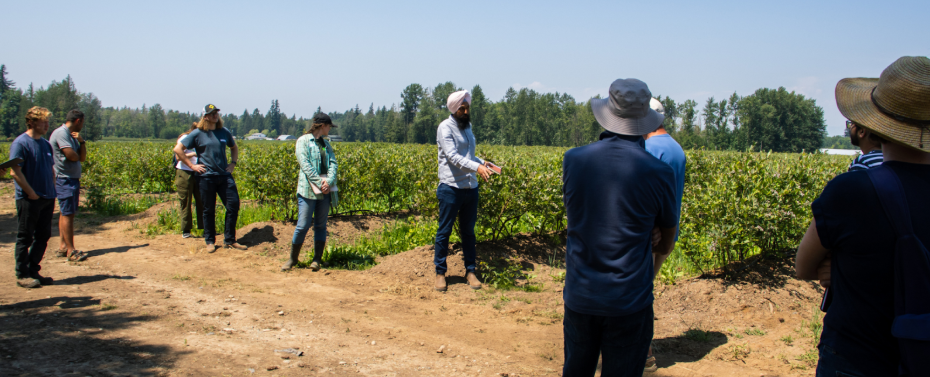
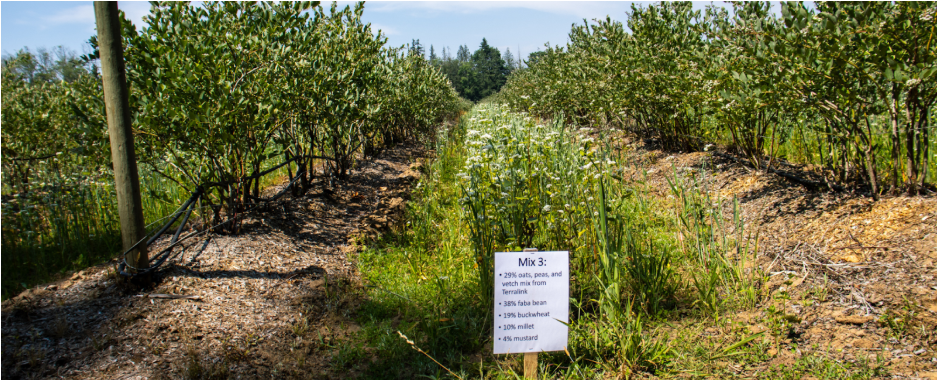
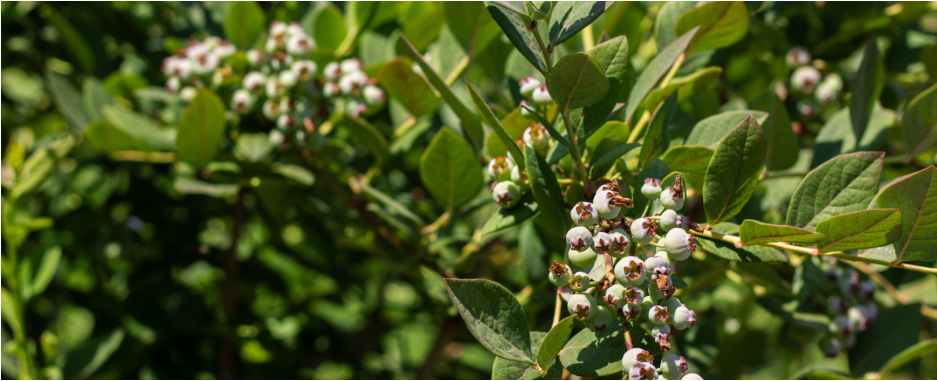
In October of 2025, FarmFolk CityFolk returned to Virasat to see how Gurprit’s cover cropping projects have developed over the past two years.
Gurprit initially began using cover cropping to improve the soil on the land in 2018. Virasat was previously a mushroom farm, and the remaining mushroom compost had left the soil very high in nitrates.
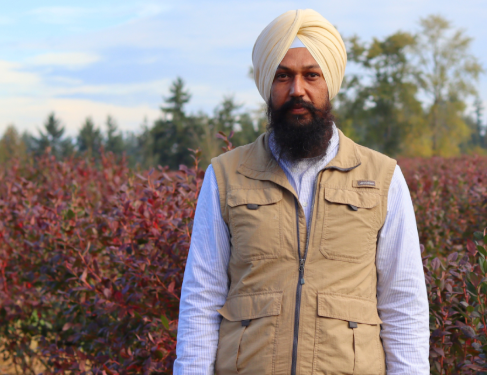
“At the time, I was not aware (about soil health), so we started experimenting with lots of things.
I have always had an ecological mindset and did not want to use aggressive fertilizer regimes and chemicals. So it (cover cropping) was kind of natural to me. We started simply, using oats, and over time, we learned and expanded. It has been a gradual learning process.”
One of the goals of covercropping when we visited in 2023 was to attract predator beetles that would help manage spotted wing drosophila infestations on the blueberries. Finding a good mix of cover crops took some trial and error, but their cover cropping method has proven to be effective for ongoing pest management.
“We got away without spraying too many insecticides to control it. It was a very good season, and we didn’t have any problem with that (pests). So cover cropping is definitely helping.”
Gurprit has noticed many positives on his farm from covercropping, including an increase in the life in the soil.
“The soils have come alive. There’s more greenery throughout the season, and in terms of farming, our water irrigation intervals have grown larger. We use SDS mowing here. So we’ll mow the cover crops and throw everything off to the side, helping us in nutrient cycling, and you see life everywhere. You see increased earthworms, you see increased greenery and with nutrient cycling, our fertilizer efficiency has increased a lot. Overall, our whole farming system is more resilient. And it’s fun to farm.”
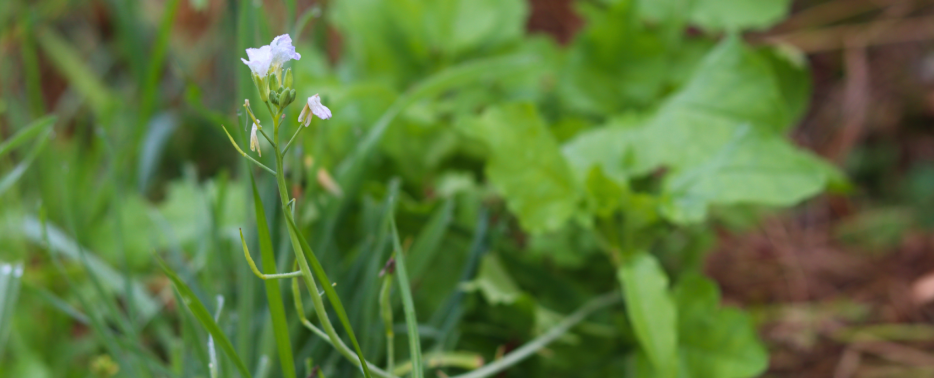
FarmFolk CityFolk asked Gurprit how his cover cropping has changed over the years, and he explained that it has been a journey trialling new cover crop combinations each year and adjusting things by either adding or extracting new varieties.
“The first cover crops we planted were in the fall, and it was oats, peas and hairy vetch – those readily available mixtures. After that, we started doing other approaches. We started using the side discharge mowing, and then we needed to bring in more diversity into our system. What we have noticed is that if we bring in more forbs, after the initial years, that’s more beneficial. The soil profile is developed more deeply. This year we had a 12-way mix. So there were 12 species that we mixed and planted. And what we have generally noticed is that more diversity gives you a larger impact on the ecology.”
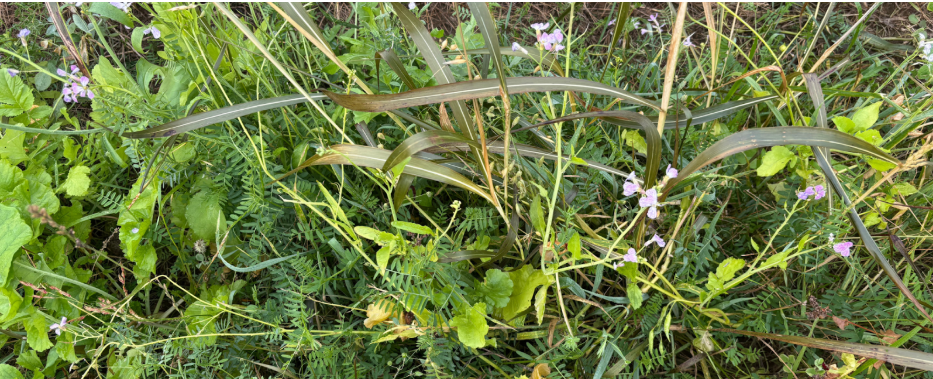
Gurprit explained how he was surprised to learn that many plants can be beneficial to the soil in cover cropping.
“Regarding my cover crop mixes, I always assumed that the legume part should be considerable so that it fixes nitrogen. As of right now, we think every plant fixes nitrogen in one way or another. When we don’t allocate a huge number of legumes in the cover crop mixes and focus on other plant families and include some deep-rooted plants in there, the profile of the topsoil that you eventually create is deeper.
When it comes to seeding timing, Gurprit emphasized the importance of aligning planting schedules with specific farm goals.
“Seeding timing is very important. It depends on what goals you have to plant cover crops, and it generally shouldn’t interfere with your main crop. If somebody’s goal is to just prevent erosion, late summer or early fall is good – there’s enough moisture and good establishment. If you want to increase the overall ecology and diversity of your farm, then you should have a living root all year round, and that’s my goal. Our leaves are green year-round, and we don’t plant everything together. We have learned that if we plow everything or cultivate all the leaves and plant everything together, then the natural habitat is lost, and to build that population again takes some time. Through our cover crop rotation over a full year, we have come to a place where we plant just once. Earlier, we used to plant it twice, summer and fall, but now we just do one pass, and we do it in the summer.
Gurprit noted that his approach to the alleyways has changed significantly since he started his farming journey.
“We, like any other farm, wanted to see those clean alleyways in the beginning, but now we love to see them green all year round. We like to see flowers in there, so we do keep a check on our number of tractor passes that we have to make through it. We will just make any tractor pass that is utmost necessary.”
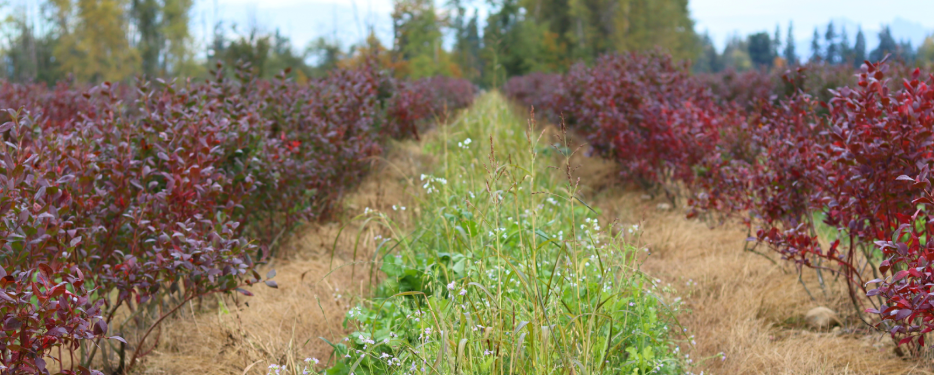
Gurprit highly recommends that other blueberry growers try cover cropping for the benefits it will bring to their farming practices.
“To any other grower that is already growing blueberries, I would definitely encourage them to trial them [cover crops]. In the context of our climate here, we can assure that they’ll find quite a few benefits. There will be fewer tractors stuck in the fall, and the water that is running out of the farm will be much cleaner. They will find that less water is running out of their lines because, over time, they’ll increase the water penetration into the soil. This increased diversity is our friend. It helps us in more ways than we can think of.”
As for future plans for the farm, Gurprit intends to continue refining his cover crop mixes to encourage as much diversity as possible and use regenerative practices on the land.
“We are continuously updating our goals, and we are trying to learn from any mistakes that we may make. We’re enjoying this whole journey, and going forward, I would like my cover crop mixes to be even more diverse than they are currently. Next year, we will be tailoring our mixes towards a higher biomass, so we are trying to put more mulch onto the berms, living mulch onto the berms.
I want to leave this land better than I got it, so right now, everything is biological nutrients. We don’t want to use anything until we really have to use any synthetic chemical or fertilizer on our soils. We try to give everything that our soil needs to be alive and lively. We are just here as stewards of land, and I keep this in my mind always.”